

How to Move Heavy Furniture Safely
June 2, 2026
- News

Moving heavy furniture can turn a simple move into a tough project fast. A couch may not seem too bad until it gets stuck in a hallway. A dresser may feel manageable until you reach the stairs. Large desks, armories, dining tables, sectionals, and entertainment centers can all be difficult to lift and load without the right plan.
If you are wondering how to move heavy furniture without damaging your home or hurting yourself, the key is to slow down before you start lifting. The best approach includes planning your route, preparing the furniture, using the right equipment, and knowing when a piece is too heavy or risky to move without the assistance of a professional mover.
Below are practical tips from our team of trained movers to help you understand the best way to move heavy furniture, including what to do when stairs are involved.
Why Moving Heavy Furniture Is So Difficult
Heavy furniture is not just hard to move because of its weight. Many large pieces are awkwardly shaped, difficult to grip, and challenging to guide through tight spaces. Even if you can lift one side of a dresser or couch, that does not mean you can safely carry it through a doorway, around a corner, or up a staircase.
Common challenges include:
- Furniture that is too wide for doorways
- Tight hallways and sharp turns
- Heavy pieces with poor grip points
- Loose drawers, shelves, cushions, or doors
- Stairs, landings, and low ceilings
- Floors that can scratch or dent easily
- Walls, railings, and doorframes that need protection
- Limited help on moving day
Rushing the process can lead to damaged furniture, scratched floors, dented walls, and injuries. A better plan can save time, stress, and repair costs.
The Best Way to Move Heavy Furniture Starts With a Plan
The best way to move heavy furniture is to plan the route before anything is lifted. Many moving problems happen because people start carrying a heavy item and only realize halfway through that it will not fit.
Before moving heavy furniture, take these steps:
- Measure the furniture.
- Measure doorways, hallways, staircases, elevators, and landings.
- Clear boxes, rugs, cords, shoes, décor, and other obstacles from the path.
- Protect floors, walls, corners, and doorframes.
- Decide whether the item needs to be disassembled.
- Choose the right equipment for the job.
- Make sure you have enough help before lifting.
If the furniture barely fits through a doorway or around a turn, do not force it. Stop, adjust the angle, or remove doors, legs, cushions, drawers, or other detachable pieces if possible.
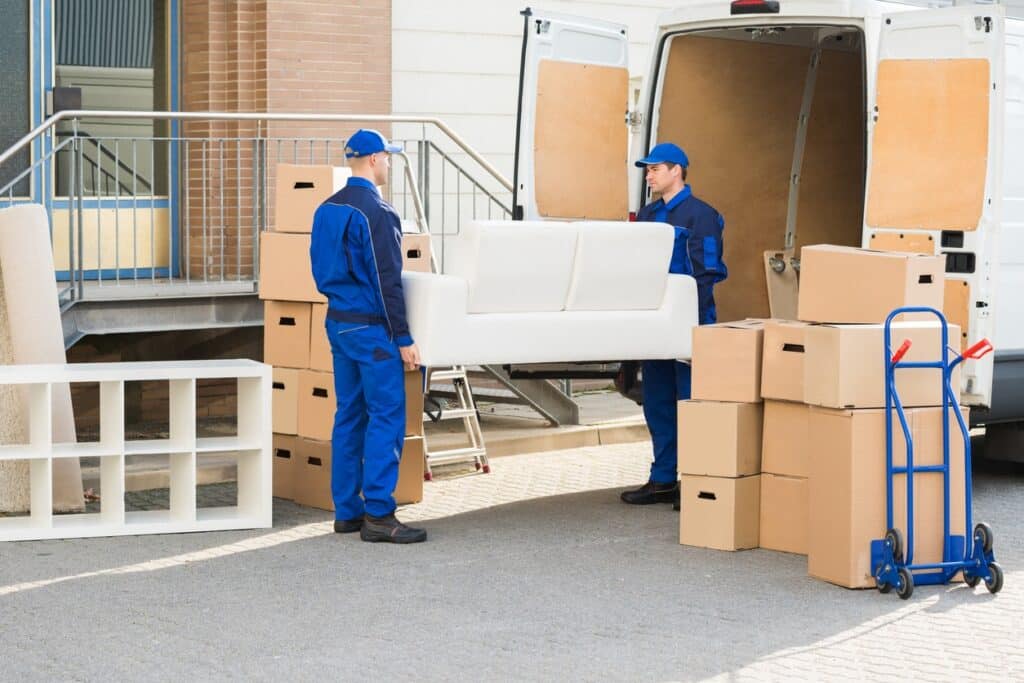
Tools You Need to Move Heavy Furniture
The right tools can make heavy furniture easier and safer to move. They can also help protect your home from damage. You do not always need every tool, but having the right supplies ready before moving day can make a big difference.
Useful moving tools include:
- Furniture sliders: Helpful for moving furniture across carpet, hardwood, tile, or laminate.
- Moving dolly: Useful for tall, boxy, or heavy items that can be strapped securely.
- Appliance dolly: Helpful for extra-heavy items that require more support.
- Lifting straps: Help two people share the weight more evenly.
- Moving blankets: Protect furniture, walls, railings, and doorframes.
- Stretch wrap: Helps keep drawers, cushions, doors, and loose parts secure.
- Work gloves: Improve grip and help protect your hands.
- Measuring tape: Helps confirm the item will fit before you move it.
- Floor protection: Cardboard, runners, or protective mats can help reduce scratches and scuffs.
Read More: Top Tips to Follow When Moving to Chicago
How to Prepare Heavy Furniture Before Moving It
Preparing the furniture before lifting can make it lighter, safer, and easier to control. It can also help prevent broken parts and damage during the move.
Empty Drawers, Shelves, and Cabinets
Do not move a heavy dresser, cabinet, desk, or storage piece while it is full. Emptying it first reduces the weight and prevents items from shifting while the furniture is being carried.
Remove books, clothing, office supplies, dishes, electronics, and anything else stored inside. Even small items can add more weight than expected.
Remove Detachable Pieces
Take off anything that can be removed safely. This may include:
- Table legs
- Sofa legs
- Cushions
- Shelves
- Drawers
- Mirrors
- Glass tops
- Bed frames
- Cabinet doors
- Knobs or handles
Place small hardware in a labeled bag so it does not get lost. Tape the bag to the furniture or pack it in a clearly marked moving box.
Wrap and Protect the Furniture
Heavy furniture can get scratched, dented, or chipped if it is not protected. Use moving blankets, padding, stretch wrap, and corner protection when needed.
Pay close attention to sharp corners, glass pieces, wood finishes, and fragile surfaces. If a piece is valuable, antique, or difficult to replace, consider hiring professional movers instead of risking damage.
How to Lift Heavy Furniture Safely
Safe lifting matters. Even one wrong move can strain your back, shoulders, knees, or hands. Heavy furniture should usually be moved by at least two people, especially when stairs, tight turns, or uneven surfaces are involved.
Use these lifting tips:
- Stand with your feet shoulder-width apart.
- Bend at your knees, not your waist.
- Keep the furniture close to your body when possible.
- Lift slowly and avoid sudden movements.
- Do not twist your body while carrying.
- Communicate clearly with your helper.
- Take breaks if the item feels too heavy.
- Set the item down if you lose control or need to adjust your grip.
Never continue carrying a heavy item just because you are halfway there. If it feels unsafe, stop and reassess the situation.
For more general information about safe lifting and injury prevention, you can review CDC lifting safety guidance.
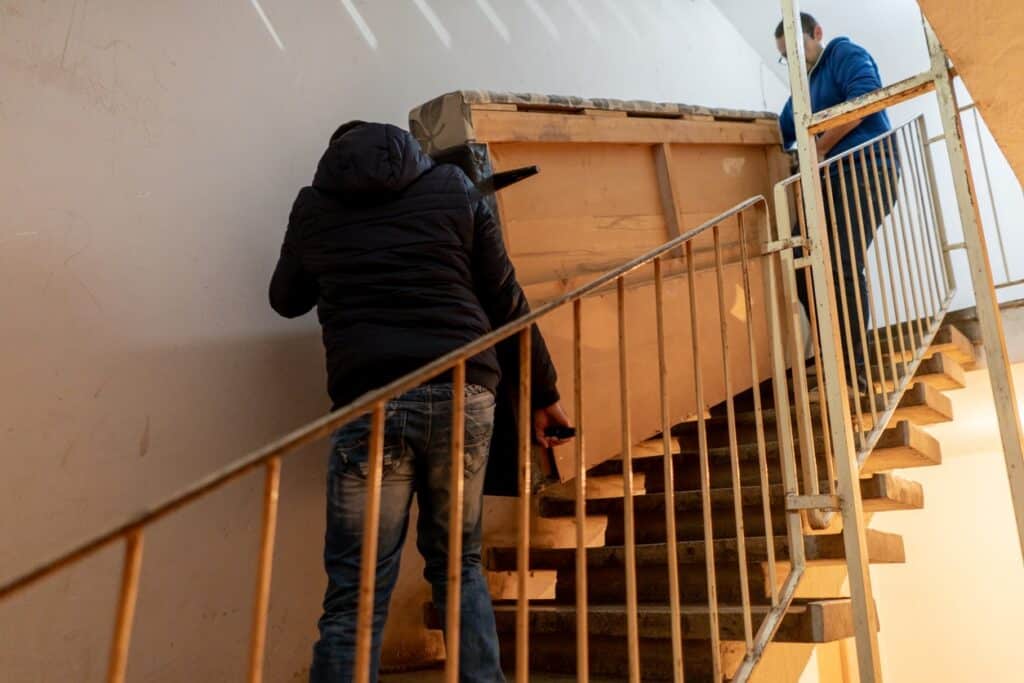
How to Move Heavy Furniture Up Stairs
Knowing how to move heavy furniture up stairs is especially important because stairs create more risk than flat surfaces. The weight shifts as you climb, the person on the lower end often carries more load, and tight landings can make it difficult to turn.
Before moving anything upstairs, inspect the staircase. If you are moving furniture in a Chicago apartment, condo, townhome, or older building, staircases may be narrow or difficult to navigate.
Follow these steps before moving heavy furniture up stairs:
- Clear the stairs and landing areas.
- Measure the furniture and staircase.
- Remove loose or detachable pieces.
- Wrap the furniture to protect walls and railings.
- Decide whether to carry the item or use a dolly.
- Assign one person to guide and one person to support.
- Move one step at a time.
- Pause at landings if needed.
- Stop immediately if the furniture gets stuck or feels unsafe.
When two people are carrying furniture upstairs, the person at the bottom usually supports more of the weight. Both people should communicate before every lift, turn, and step. Simple commands like “lift,” “pause,” “turn,” and “set down” can help prevent confusion.
Do not try to move heavy furniture up stairs alone. Even if the item seems manageable at first, it can become dangerous once the weight shifts or the piece gets caught on a railing, wall, or step.
Read More: How to Pack Fragile Dishes for Moving
What Not to Move by Yourself
Some items are too heavy, fragile, expensive, or awkward to move without trained help. Trying to move these pieces yourself can lead to injury, damage, or both.
Think twice before moving these items on your own:
- Pianos
- Safes
- Pool tables
- Large armoires
- Oversized sectionals
- Marble or stone-top tables
- Antique furniture
- Large appliances
- Heavy desks
- Conference tables
- Glass furniture
- Tall entertainment centers
For example, pianos require special handling, equipment, and experience. If you need help with one, Midway Moving offers piano moving services for customers who need extra care with a heavy specialty item.
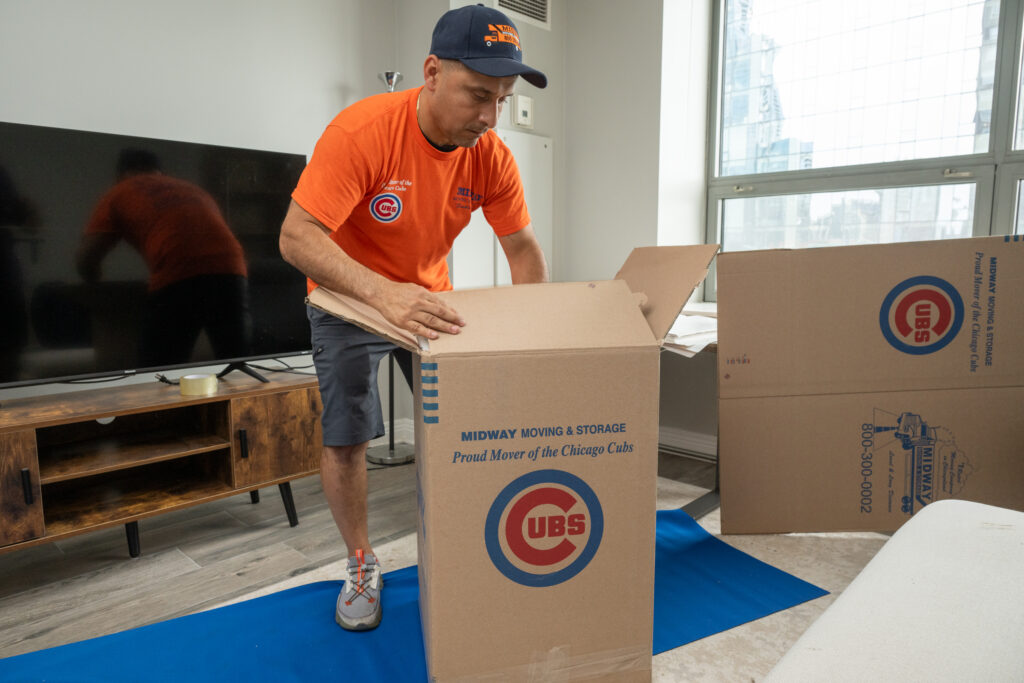
When to Hire Professional Movers for Heavy Furniture
Do-it-yourself (DIY) moving can work for smaller items, but heavy furniture is different. If the item is large, valuable, fragile, or needs to go up or down stairs, we recommend working with the team of skilled movers from our Chicago moving company to avoid damage.
Professional movers can help reduce the risk of injury, protect your home, and move bulky items more efficiently. This is especially helpful in Chicago, where many moves involve apartments, condos, high-rises, walk-ups, elevators, loading zones, parking restrictions, narrow hallways, and tight staircases.
Midway Moving offers residential moving services and commercial moving services for homes and businesses in Chicago. If you need assistance, give our team a call at (800) 300-0002. Our trained movers are available to provide moving support for your home, apartment, condo, or office. View our service areas and contact our team with questions or concerns.