

8 Signs It May Be Time to Outsource Your Warehouse Operations
October 2, 2026
- News
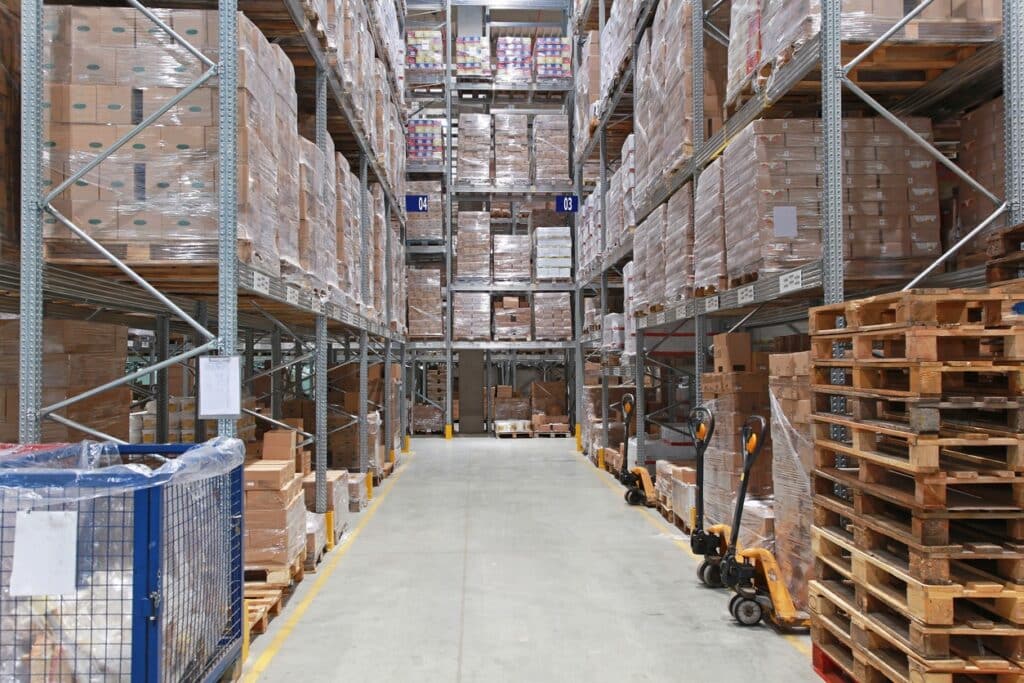
As a business grows, so does the amount of space, labor, equipment, and coordination required to manage inventory. A warehouse that worked well when the company was smaller can eventually become crowded, expensive, and difficult to operate efficiently.
That does not necessarily mean it is time to lease a larger building or hire more warehouse employees. For many growing companies, outsourced warehousing and distribution provides another option.
Instead of investing in additional warehouse infrastructure, a business can choose to outsource its warehousing to Midway Moving & Storage. Our warehouses are designed to handle storage, receiving, inventory management, fulfillment, distribution, and transportation.
So, when does outsourcing actually make sense?
There is no single answer. However, there are several signs that indicate your current warehouse operation may be holding your business back rather than supporting its growth.
What Is Outsourced Warehousing?
Outsourced warehousing means using a third-party provider to manage some or all of the warehouse functions your business would otherwise handle internally.
The arrangement can be relatively simple. A company may only need additional storage space for seasonal inventory, equipment, or overflow products. Other businesses need a much broader operation that includes receiving shipments, organizing inventory, picking orders, packaging products, preparing freight, and coordinating deliveries.
This is where outsourced warehousing and fulfillment goes beyond basic storage. Products are not simply placed inside a warehouse until someone retrieves them. The warehouse becomes an active part of the company’s supply chain.
At Midway Moving & Storage, our warehousing services in Chicago can support commercial storage, inventory management, order fulfillment, pick and pack, cross-docking, freight handling, distribution, sorting and kitting, final-mile delivery, and other logistics requirements.
Top Signs You Should Outsource Your Warehouse Operations
1. You’re Running Out of Warehouse Space
Running out of space is often the most obvious sign that a business needs to rethink its warehousing strategy.
Maybe inventory is being stored in areas that were never intended for storage. Pallets may be crowding receiving areas, aisles may be getting tighter, or employees may constantly need to move one group of products to access another.
At that point, the question becomes whether acquiring more space is really the right answer.
A larger facility can mean a new lease, higher utility bills, additional equipment, more insurance, increased maintenance expenses, and potentially more employees. Flexible outsourced warehouse space gives businesses another way to increase capacity without immediately committing to a larger facility.
It can also be useful for temporary needs such as seasonal inventory, office renovations, retail projects, product launches, commercial relocations, or periods of unusually high demand.
2. Warehouse Costs Are Becoming Difficult to Justify
The cost of running a warehouse extends well beyond rent.
Businesses also need to account for warehouse employees, management, utilities, equipment, maintenance, security, insurance, technology, training, and other operating expenses.
Labor alone can represent a significant investment. According to U.S. Bureau of Labor Statistics warehousing and storage industry data, average hourly earnings for employees in the warehousing and storage industry were $26.74 in July 2026. Transportation, storage, and distribution managers had a 2025 median annual wage of $99,330 within the industry.
Those numbers do not automatically mean outsourcing will cost less. Every operation is different. They do show why businesses need to consider the full cost of running a warehouse rather than comparing only the price of warehouse space.
When evaluating outsourcing warehouse operations, compare the total cost of your current operation with the cost of having the team from Midway Moving manage the space, labor, handling, and logistics functions.

3. Seasonal Demand Makes Space and Staffing Unpredictable
Some businesses need approximately the same amount of warehouse space throughout the year. Many do not.
Retailers may build inventory ahead of the holidays. Contractors can experience project-based demand. E-commerce businesses may see sharp spikes during promotions. Other organizations may need substantial storage for only a few weeks or months at a time.
Maintaining enough warehouse space and labor for your busiest period can leave you paying for unused capacity during slower months.
This challenge is particularly relevant as e-commerce continues to represent a substantial share of U.S. retail activity. The U.S. Census Bureau’s quarterly retail e-commerce report found that adjusted e-commerce sales accounted for 17.1% of total U.S. retail sales during the second quarter of 2026. Adjusted e-commerce sales also increased 12.2% compared with the second quarter of 2025.
Outsourced warehouse capacity can give businesses more flexibility when inventory and fulfillment requirements change throughout the year.
4. Warehouse Management Is Taking Time Away From Your Business
Warehousing becomes increasingly complicated as a company grows.
Someone needs to coordinate incoming shipments. Employees have to be scheduled and trained. Inventory must be organized. Equipment needs maintenance. Freight has to arrive and leave on schedule. Problems with damaged goods, delayed shipments, misplaced inventory, or unexpected deliveries need to be addressed.
Individually, these responsibilities may seem manageable. Together, they can consume significant management time.
If company leaders or employees are spending more time solving warehouse problems than focusing on customers, products, sales, operations, or growth, outsourcing warehouse operations may allow those resources to be used more effectively.
5. Inventory Management Is Becoming Too Complicated
Inventory management is relatively straightforward when a business has a small number of products and limited order volume. Complexity increases quickly as the operation grows.
More SKUs, larger shipments, multiple customer orders, project-specific inventory, retail replenishment, and different delivery schedules can make it difficult to know exactly what is in storage and what needs to happen next.
Warning signs can include frequent inventory discrepancies, difficulty locating products, misplaced goods, unnecessary handling, stockouts, delayed orders, and employees spending too much time searching for items.
A warehouse should make inventory easier to manage, not harder.
Midway’s warehousing services can help businesses organize goods by factors such as customer, department, project, order, SKU, destination, or delivery schedule. Inventory can then be staged and prepared based on what needs to happen next.
6. You Need Fulfillment, Not Just Storage
There is an important difference between needing somewhere to put inventory and needing someone to actively manage it.
A business might begin by simply needing additional storage space. As order volume grows, however, employees may need to receive products, locate individual items, assemble orders, pack them, label them, stage them, and coordinate shipping or delivery.
That is when outsourced warehousing and fulfillment can become more valuable than storage alone.
Midway provides pick-and-pack services for uses such as online orders, retail orders, B2B orders, product kits, project materials, replacement parts, and other multi-item shipments. We also offer sorting and kitting services when multiple items need to be prepared as a single bundle before shipment or delivery.
Connecting these activities within the same warehouse can simplify the movement of inventory from receiving through final delivery.
7. Your Business Is Expanding Into a New Market
Geographic expansion creates another warehousing question.
Suppose a company wants to establish a stronger presence in Chicago. Building an internal warehouse operation could require finding appropriate real estate, signing a lease, purchasing equipment, recruiting employees, setting up receiving procedures, developing inventory processes, and arranging transportation.
That is a substantial commitment before the company knows exactly how demand will develop.
Outsourced warehousing and distribution can give businesses access to warehouse and logistics infrastructure without requiring them to build an entire operation from scratch.
8. You Need Warehousing and Transportation to Work Together
Storage is only one part of the supply chain.
Products need to reach the warehouse, move through it efficiently, and eventually leave for another destination. Using separate companies for each stage can create additional communication and scheduling challenges.
A business may have one provider handling freight, another operating the warehouse, and another responsible for the final mile delivery. When something changes, several parties may need to coordinate before the problem can be resolved.
A provider capable of supporting both warehousing and transportation can simplify that process.
Midway’s warehouse capabilities include receiving, freight handling, cross-docking, distribution, and final-mile delivery in addition to commercial storage and fulfillment. Cross-docking can be particularly useful when inbound goods need to be sorted, staged, and transferred toward outbound transportation instead of remaining in long-term storage.
Commercial Warehousing Services – Call Midway Moving & Storage Today!
When warehouse space, inventory, staffing, fulfillment, or transportation starts becoming difficult to manage internally, it may be time to consider another approach.
Midway Moving & Storage has served the Chicago area since 1987 and provides businesses with warehousing solutions designed around their storage, handling, fulfillment, distribution, and delivery requirements.
Our available services include commercial storage, inventory management, receiving and shipping, order fulfillment, pick and pack, cross-docking, freight handling, sorting and kitting, distribution, flexible warehouse space, and final-mile delivery. Businesses that primarily need secure off-site space can also explore Midway’s full-service storage facilities in Chicago and commercial storage services. Contact our team at (800) 300-0002 to learn more about our available commercial warehousing and distribution services.